
Pain Management Protocol US Pain Relief, PLLC.
Goal: To provide safe and effective care for patients experiencing pain by aligning our practice
with the standards set forth by CDC and state of Colorado.
Process: Evaluate patient’s history of pain and type of pain, potential for addiction, functional
status, psychosocial risks, medical co-morbidities, and ongoing response to treatment.
- Identify type of pain and source of pain. Review/obtain imaging or other studies such as EMG to
- provide clear diagnosis of type of pain. Physical evaluation.
a. Acute vs Chronic Pain
i. Acute: tissue injury which resolves with healing
ii. Chronic: Initially pain generated by injury but lasting longer than 3 months or longer than
expected healing time for the injury. In chronic pain a shift occurs from acute injury and
healing to abnormal maladaptive pain. This occurs in the peripheral and central pain
pathways.
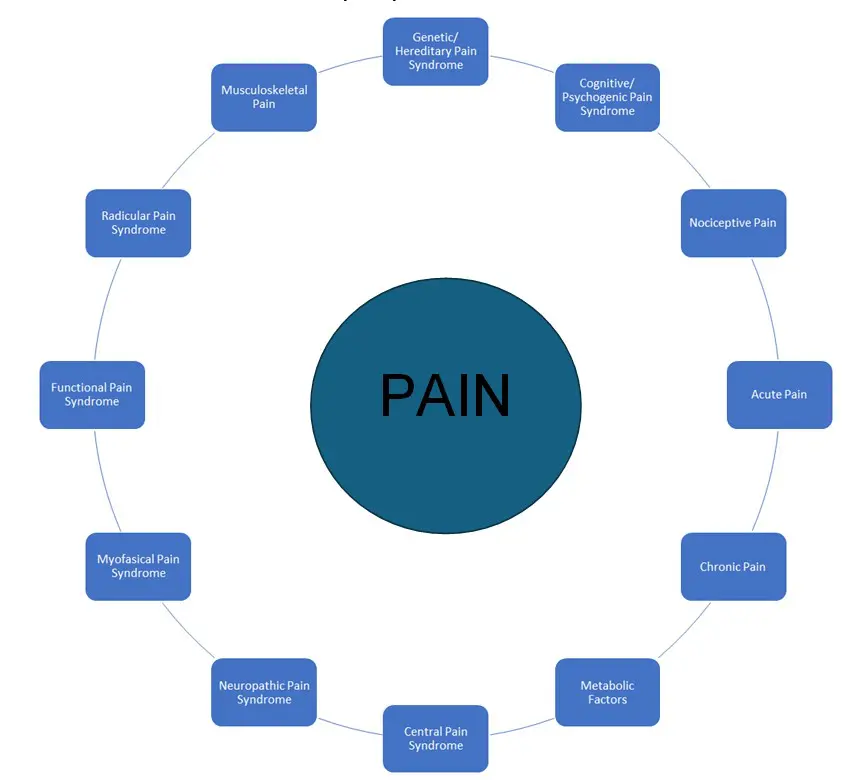
Pain Model
Pain
- Functional pain syndrome
- Genetic/Hereditary pain syndrome
- Cognitive/Psychogenic pain syndrome
- Acute pain
- Chronic pain
- Metabolic Factors (Opioid tolerance, weight, drug metabolism)
- Centralized pain syndrome
- Neuropathic pain syndrome
- Myofascial pain syndrome
- Nociceptive pain syndrome
- Radicular pain syndrome
- Musculoskeletal pain syndrome
Functional pain syndromes: (FPS) characterize a subset of individuals who experience pain and related symptoms and disability without clear structural or disease etiology.
Cognition/Psychogenic pain: is defined as the brain's ability to acquire, process, store, and retrieve information. Pain has been described as an unpleasant sensory or emotional experience, and for experiencing pain consciously, cognitive processing becomes imperative.
Acute pain: is caused by injury, surgery, illness, trauma or painful medical procedures. Acute pain. This pain may come from inflammation, tissue damage, injury, illness, or recent surgery. It usually lasts less than a week or two. The pain usually ends after the underlying cause is treated or has been resolved.
Chronic pain: is long standing pain that persists beyond the usual recovery period or occurs along with a chronic health condition, such as arthritis. Chronic pain may be "on" and "off" or continuous. It may affect people to the point that they can't work, eat properly, take part in physical activity, or enjoy life.
Central pain syndrome: is a neurological condition consisting of constant, moderate to severe pain due to damage to the central nervous system (CNS) which causes a sensitization of the pain system.
Neuropathic pain: caused by a lesion or disease of the somatosensory nervous system.
Metabolic factors: causing increased pain
Myofascial pain syndrome: Myofascial pain can be defined as "pain associated with inflammation or irritation of muscle or of the fascia surrounding the muscle".
Radicular pain: Radicular pain is a very specific type of pain can occur when the spinal nerve gets compressed or inflamed. It radiates from the back and hip into the leg(s) by way of the spine and spinal nerve root. People who have radicular pain may experience tingling, numbness, and muscle weakness. Pain that radiates from the back and into the leg is called radiculopathy. It is commonly known as
12-point pain model
2) Psychosocial Risk Assessment
a. Abuse and trauma
b. Coping and social support
c. Smoking, alcohol abuse, substance abuse
3) Co-morbidity assessment
a. Depression and anxiety
b. Sleep impairment
c. Chronic respiratory disease
d. Neurologic disorders
e. cardiovascular disease
f. Metabolic disorders
4) Assessment of medication side effects including:
a. Psychological: Euphoria, depression, anxiety, thought disorders, addiction, serotonin syndrome,
etc.
b. Functional: sedation, respiratory depression, constipation, nausea, vomiting, etc.
c. Physical ability to care for oneself and to work
d. Immunologic changes: pruritus, skin reactions
e. Endocrine changes
Program Components:
1) Assessment: addiction, functional status, imaging, neuromuscular testing, etc.
2) Cognitive Behavioral Therapy and coping skills (Behavioral Health)
3) Progressive strengthening and functional restoration (in conjunction with Physical Therapy and
Health Works), Multi-Modalities.
4) Medication in compliance with CDC recommendations
a. Establish treatment goals for pain and function
b. Consider how therapy will be discontinued if benefits do not outweigh risks
c. Continue opioid therapy only if clinically meaningful improvement in pain and function
outweighs safety risks
d. non-pharmacologic therapy and non-opioid therapy are preferred for chronic pain
e. When using opioid therapy, combine with non-pharmacologic therapy and non-opioid therapy as
appropriate.
f. Review with patient risk/benefit and side effects of medications.
5) Medication Management Agreements (“Pain Contracts”) – including random drug screening,
functional assessment, participation in functional restoration through physical therapy and
exercise, multi-modality interventions, pill counts at appointment(s) when directed, attendance
and participation in all aspects of pain management, etc.
6) Violations to not adhering to pain management agreement
a. Patient will be safely tapered off medication and referred to appropriate resources, or
discharged from practice if indicated.
b. Patient will be encouraged to continue with our practice for non-pain management care,
Injection therapy, multi-modality approach.
Criteria for referral to alternative resources.
a. Scope of care is beyond CDC guidelines for pain management (hospice, palliative care, addiction medicine)
b. Patient is not improving with prescribed therapies
c. Patient is a candidate for spinal injections/blocks
d. Patient requires specialty services (neuro-surgical, neurology, ortho)
e. Patient requires assistive equipment, home health, alternative therapy.
Criteria for long term Primary Care Pain Management:
1) All diagnostic studies are filed in EMR which support diagnosis of pain and type of pain
2) Addiction Assessment
3) Functional Capacity Assessment
4) Co-Morbidity Assessment
5) UDS compliance
6) Full participation in Physical Therapy/Exercise program/alternative modalities with
Documentable improvements in functional status, multi-modality approach, referrals, etc.
7) No missed appointments for therapy or medical management, initial evaluation will be
followed up at frequent intervals of no longer than every 1 month.
8) PDMP consistency
9) Pill count consistency
10) Signed Pain Contract
11) Quarterly review of adherence, addiction and functional status as well as medication side
effects
12) Participation in smoking cessation, alcohol abuse treatment, substance abuse treatment as
determined in treatment plan
Consequences of Non-Adherence to full treatment plan, including appointment attendance.
- Patient placed on UDS protocol
- Taper medication if indicated
- Re-evaluation with peer to peer
- Counseling patient on attendance and or UDS/Med compliance.
- Pt will be safely weaned off all controlled substances
- No further scripts for controlled substances will be written by our practice.
Practice Prescribing Policy
Our prescribing policies are aligned with the CDC guidelines for prescribing opioidmedications.
1) Utilize non-pharmacologic therapies first
2) Manage co-morbidities with non-opioid, non-benzodiazepine medications.
3) When treating acute pain will only use opioid medications if the acute benefit outweighs the risk
of utilizing opioid medication.
4) For chronic pain, maximize non-opioid medications such as:
a. Tylenol/NSAIDS
b. Tricyclic anti-depressants
c. Gabapentin
d. Pregabalin
e. Etc.
5) Document clinically meaningful functional status at each appointment.
a. Annually complete comprehensive functional status assessment
b. Scores should improve by 30 % to be considered clinically significant improvement in functional
status.
6) Screen for addiction at every encounter for pain management
7) Review known risks of and realistic benefits of opioids at every appointment for pain
management.
a. The primary goal of our care is to restore function, not eliminate all pain
b. Fatal respiratory depression does occur
c. Potentially serious lifelong opioid use disorder leads to increase distress and inability to fulfill
major role obligations.
Common effects of opioids include
i. Constipation (prevention with increasing fluids, fiber and exercise)
ii. Dry mouth
iii. Nausea, vomiting
iv. Drowsiness
v. Confusion
vi. Tolerance
vii. Physical dependence
viii. Withdrawal symptoms
ix. Possibility for impairment when driving or operating equipment which is unsafe and illegal
9) Prescribe lowest effective dose
10) After starting or increasing opioids re-evaluate in 1 to 4 weeks.
a. If benefit does not outweigh harm:
b. Optimize other therapies and work with patient to taper opioids to lowest possible dose.
11) Plan strategies to mitigate risks of opioids.
12) Review MAPPs at initiation of opioid medication and at least every 1 months
13) Urine drug screen compliance and review.
14) Avoid prescribing opioids with benzodiazepines
15) Provide resources for opioid dependence disorder.
Practice
1. On a first new patient visit, no narcotics or other controlled substances will be prescribed.
2. Patients requiring chronic pain medications or long term-controlled substance therapy must
enter a written controlled substance medication management agreement (Pain Contract) and
agree to use only one pain management provider or practice, and only one pharmacy.
3. Urine drug screens may be requested at any time and are the financial responsibility of the
patient.
4. Chronic narcotic management requires individual visits to address the diagnosis and its
treatment independent of other medical problems. Usually this requires a dedicated visit every
month or more often when UDS protocol is enacted.
5. Patients found in violation of medication management agreement will no longer be prescribed
narcotic medications and may be discharged from the practice.
UDS guidance
Patient review, each patient is unique in their diagnosis, situation and psychosocialconsideration.
Ultimately up to the provider per their discretion, in alignment with US Pain Relief, PLLC.
Urine Drug Screens
- No primary or no metabolite, or >1000 on primary with no metabolite with trending indicating shaving in cup or diversion.
- Consider Mouth swab for confirmation.
- Counsel patient on proper use and indications of medication as they were prescribed.
- Identify barriers to proper utilization
- Warning of UDS protocol if continuation of Red Flag behavior.
- Initiate UDS protocol for continued non-compliance.
- 7-day prescriptions for 3 weeks and weekly UDS.
- Illicit drug use (one illicit drug identified in UDS)
- One illicit drug found in UDS.
- Initiate UDS protocol to be completed for 3 weeks and clear and consistent UDS.
- Consider referral to CBT.
- 7-day prescriptions for 3 weeks and weekly UDS.
- Consider 25% reduction if patient has co-existing high-risk comorbidities or behavior health problems.
- Referral for substance abuse
- Illicit Drug Use (more than 1 illicit drug identified)
- Consider Mouth swab for confirmation.
- Counsel patient on proper use and indications of medication as they were prescribed.
- Identify barriers to proper utilization
- Initiate UDS protocol for non-compliance.
- 7-day prescriptions for 3 weeks and weekly UDS.
- 25% reduction in prescribed therapy at provider discretion per risk profile.
- Referral for substance abuse.
- Illicit Drug Use (more than 2 illicit drugs identified)
- Consider Mouth swab for confirmation.
- Counsel patient on proper use and indications of medication as they were prescribed.
- Identify barriers to proper utilization
- Initiate UDS protocol for non-compliance.
- 7-day prescriptions for 3 weeks and weekly UDS.
- 25%-50% reduction in prescribed therapy at provider discretion per risk profile.
- Referral for substance abuse
- Benzodiazepine
- New patient place patient on a taper protocol per CDC guidelines.
- Established patient Consider UDS protocol per provider discretion
- Review board for Benzo indications and use with peer to peer
UDS by # of drug screens.
- Positive or negative UDS, Patients 1st UDS per protocol.
- Continuation of protocol
- Consider 25% taper if patients UDS is still non-compliant
- Continuation of protocol
- Consider 25% taper if patients UDS remains non-compliant
- Re-evaluate patient and Consider 25% taper of medication
- Continuation of protocol
- Stop opioid therapy, counsel patient, explore alternative pain management, referral to specialty clinic (methadone clinic), Bring to board review peer to peer, If patient wishes to continue must complete at a minimum of 3 out of 3 consistent UDS before with established compliance and low risk behavior before considering continuation.
Created 2/7/2021 by Derek Stibbens, ACNPC-AG; CMO DHCP Solutions, LLC